
Alex Padilla
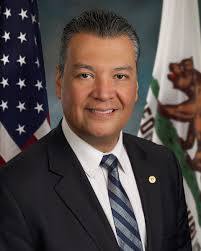
Alex Padilla is one of the most consequential and historic figures in California politics — the son of Mexican immigrants who rose from the working-class streets of the San Fernando Valley to become the first Latino ever to represent California in the United States Senate. His life story is the embodiment of the American dream he has spent his entire career fighting to protect.
Padilla was born and raised in the proud, working-class community of Pacoima, in the San Fernando Valley. His parents immigrated to Los Angeles from different parts of Mexico in the 1960s, met, fell in love, and applied for green cards. His father worked as a short order cook in Los Angeles diners for forty years, and his mother spent the same forty years cleaning houses. They instilled in Alex and his siblings the importance of education and service to others. He attended Los Angeles public schools and graduated from San Fernando High School before earning a degree in mechanical engineering from the Massachusetts Institute of Technology in 1994 — a rare academic achievement for a kid from Pacoima.
In 1994, a rising tide of anti-immigrant sentiment drew Padilla toward politics. He joined protests against California's Proposition 187, which sought to deny public benefits to immigrants, and resolved to dedicate his life to civic engagement and public service. He went on to manage political campaigns and served as a field representative for Senator Dianne Feinstein before launching his own electoral career.
In 1999, at just 26 years old, Padilla was elected to the Los Angeles City Council to represent the district where he grew up. Just two years later, he was elected by his colleagues to serve as President of the City Council — the youngest person in city history and the first Latino in over 100 years to hold the position. During the September 11 attacks, with Mayor James Hahn out of town, Padilla served as acting Mayor of Los Angeles, providing steadying leadership during one of the city's most fraught moments.
In 2006, Padilla was elected to California's State Senate, where over two terms he became known as one of California's most effective state legislators, winning approval for 93 bills signed into law. He chaired the State Senate Committee on Energy, Utilities, and Communications, and authored landmark bills requiring nutritional information on restaurant menus, streamlining community college transfers to four-year universities, phasing out single-use plastic bags, and mandating deployment of the state's earthquake early warning system.
In 2014, Padilla was elected California Secretary of State — the first Latino in state history to serve in the office — where he served as the state's chief election official, overseeing efforts to increase voter registration and modernize the state's voting systems.
He began serving in the U.S. Senate in January 2021 after being appointed by Governor Gavin Newsom to fill the vacancy created by the election of Vice President Kamala Harris. He is the first Latino to represent California in the U.S. Senate. He won a special election in November 2022 to complete Harris's term and was simultaneously elected to a full six-year term. He became California's senior senator on September 29, 2023, upon the death of Dianne Feinstein.
In the Senate, Padilla has established himself as a champion of voting rights, climate action, and immigration reform. He is the first Latino to serve as Chairman of the Senate Judiciary Subcommittee on Immigration, Citizenship, and Border Safety. His first bill, the Citizenship for Essential Workers Act, sought to create a pathway to citizenship for undocumented immigrants who served as essential workers during the COVID-19 pandemic. He also serves on the Senate Committees on Budget; Environment and Public Works; Energy and Natural Resources; Judiciary; and Rules.
In recent months, Padilla has emerged as one of the Senate's most vocal opponents of the Trump administration's immigration enforcement policies. In June 2025, he was forcibly removed and briefly handcuffed by Secret Service agents after interrupting a Homeland Security Secretary Kristi Noem press conference in Los Angeles to challenge her characterizations of the city's leadership. The incident drew national attention and became a symbol of Democratic resistance to federal immigration crackdowns in California. He lives in the San Fernando Valley with his wife Angela and their three sons.